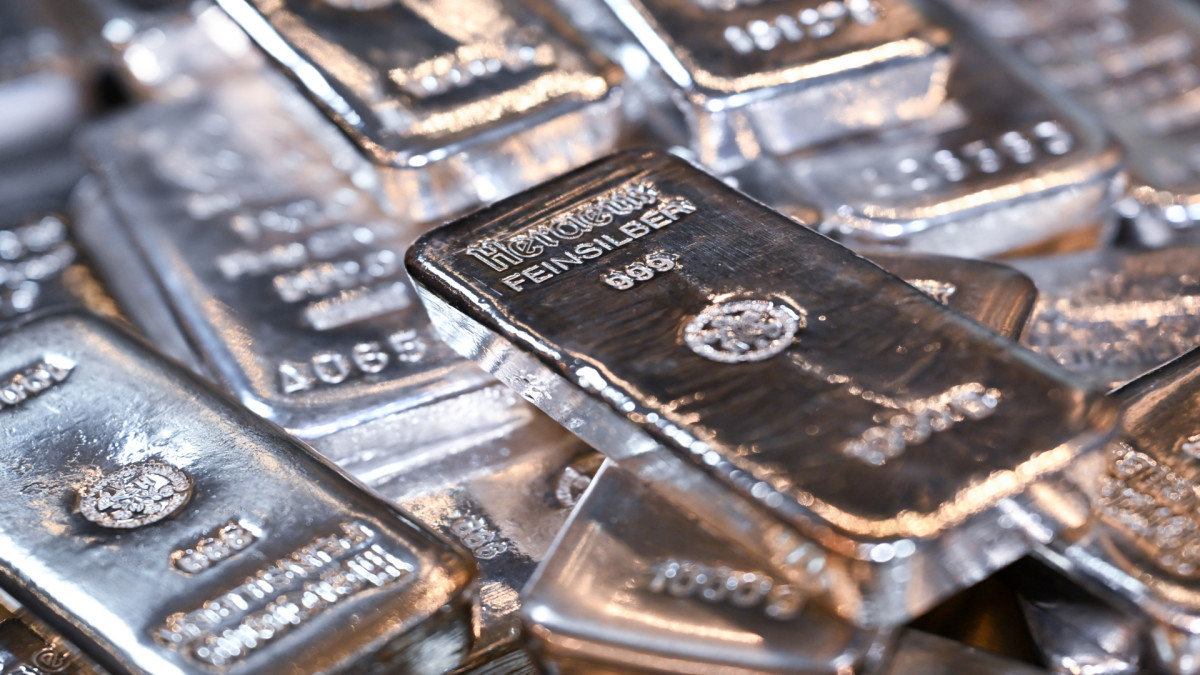
Silver has bounced back after a volatile stretch. Spot silver is trading around $69 to $70 per ounce, recovering from a pullback that took prices as low as $67.75 on March 26. The metal had been trading as high as $72.60 on March 25 before sellers pushed it lower.
The move back toward $70 reflects a combination of short-term macro factors and longer-term structural forces that have been building for years. Understanding both helps explain why silver has been one of the most closely watched commodities of 2026.
What pushed silver lower and what brought it back
The pullback from the March 25 high was driven by a strengthening US dollar and rising real Treasury yields. Both raise the opportunity cost of holding a non-yielding asset like silver.
The Fed’s signal that it expects only one rate cut in 2026 reinforced that pressure. Silver struggles when rate cut expectations fade.
More Gold:
- Gold just saw its biggest decline since 1983: what’s next
- Gold and silver bugs face grim reality check
- Gold’s price is falling fast: Here’s what comes next
The recovery reflects the market reasserting silver’s longer-term bull case. Geopolitical tensions from the ongoing Iran conflict have kept safe-haven demand alive. A slight pullback in the dollar index gave silver room to recover. And the underlying supply and demand fundamentals, which have been building for years, have not changed.
The structural case for silver
2026 is the sixth consecutive year of a global silver supply deficit. Mine supply is projected to reach approximately 1.05 billion ounces in 2026, its highest level in a decade. But industrial demand is still outpacing it.
The accumulated deficit between 2021 and 2025 is estimated at roughly 900 million ounces, according to Peel Hunt. That sustained drawdown has depleted above-ground stockpiles to multi-year lows.
Industrial applications now account for more than half of total silver consumption. The primary driver is solar energy.
Silver is a key component in photovoltaic cells. Manufacturers have been reducing the amount used per panel through a process called thrifting. But overall PV demand still accounts for roughly 194 million ounces in 2026, according to BloombergNEF. Electric vehicles, power grid infrastructure, and electronics add to that demand.
Key forces shaping silver in 2026
- Supply deficit. Six consecutive years of demand outpacing mine output has depleted above-ground stockpiles. Mine supply growth remains constrained because most silver is produced as a byproduct of copper, zinc, and lead mining.
- Solar demand. PV installations continue to expand globally despite per-panel silver usage declining. Even with thrifting, solar remains the single largest industrial consumer of the metal.
- China export restrictions. From January 2026, China implemented a new licensing regime for silver exports, restricting eligibility to larger producers. This has tightened global physical supply further.
- Macro backdrop. Expectations for eventual Fed rate cuts, a weaker dollar trend, and elevated geopolitical risk all support silver as both an industrial metal and a safe-haven asset.
Hoppe/Getty Images
Where analysts see silver going
Wall Street forecasts for silver in 2026 vary widely. J.P. Morgan projects silver could average $81 per ounce for the year. Peel Hunt raised its full-year forecast to $75 per ounce. ING is more conservative at around $55 per ounce.
The wide range reflects genuine uncertainty. The key variables are the Fed’s rate path, the strength of the US dollar, and how industrial demand from China holds up through the rest of the year.
The gold-to-silver ratio has narrowed significantly in 2026, indicating silver has been outperforming gold over recent months. A declining ratio historically coincides with strong precious metals bull markets and signals increasing institutional confidence in silver relative to gold.
What the current price action means for investors
The bounce from $67.75 back toward $70 is consistent with what multiple analysts have described as a market with a solid demand floor. Even during pullbacks, buyers have been returning at lower levels, supported by the structural deficit and ongoing industrial demand.
Silver’s dual role as both an industrial metal and a safe-haven asset makes it more sensitive to economic data than gold. When growth concerns dominate, silver faces more pressure. When inflation and geopolitical risk dominate, silver tends to outperform.
The current environment has elements of both. That is what explains much of the volatility seen this month.
For investors watching the metal, the supply deficit story is the most durable fundamental. Six years of deficits and depleted stockpiles do not reverse quickly. The question is whether the macro environment cooperates enough to let that fundamental case play out in the price.
Related: Silver’s glitter leaves speculators with a bad taste