
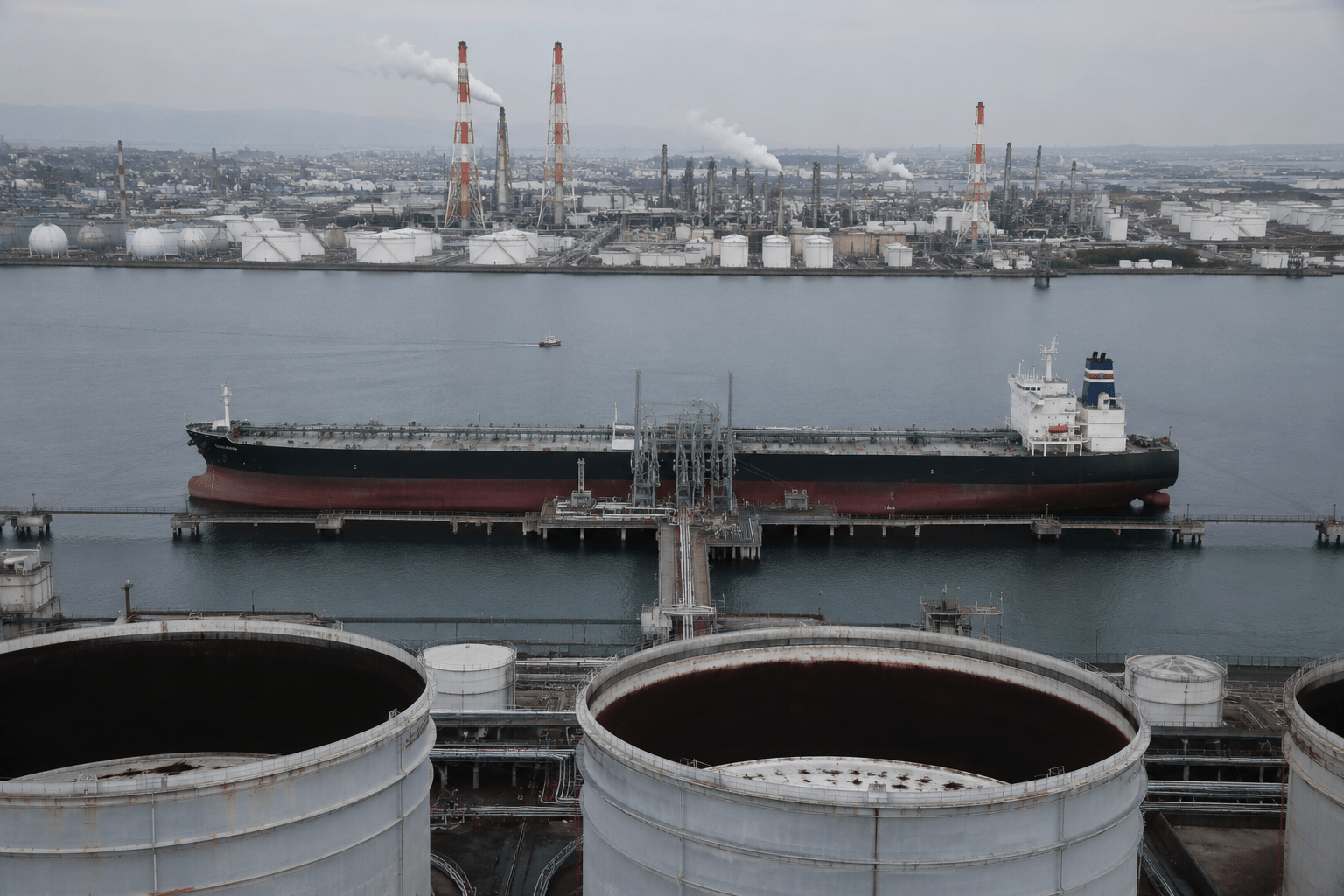
Japan’s crude oil imports fell nearly 66% in April compared with the same month a year earlier, according to data released by the Ministry of Economy, Trade and Industry (METI) on Friday.
The sharp decline came as the US-Iran conflict continued to disrupt energy supplies from the Middle East, a region that remains Japan’s primary source of crude oil imports.
Middle East supply flows decline
METI data showed that Japan, the world’s fifth-largest oil importer, imported 850,000 barrels per day (bpd), or 4.07 million kilolitres, of crude oil in April.
Imports from the Middle East dropped 68% from a year earlier, highlighting the impact of ongoing disruptions in the region.
According to the report, the US-Israeli war on Iran, which began on February 28, has significantly reduced shipping activity through the Strait of Hormuz.
The waterway is a critical transit route for roughly one-fifth of the world’s oil and liquefied natural gas supplies.
The decline in imports was particularly evident among Japan’s largest crude suppliers.
Shipments from Saudi Arabia and the United Arab Emirates, Japan’s two biggest oil providers, fell by more than 60%, the data showed.
Strait of Hormuz remains under pressure
While several crude oil tankers have departed the Gulf this month, energy shipments moving through the Strait of Hormuz remain well below levels seen before the conflict began.
The reduction in available supplies has affected refiners across the region.
Refiners in Japan and other Asian countries deepened refinery run cuts during April and May as they responded to ongoing crude shortages.
The lower availability of crude oil has contributed to weaker refining activity and reduced fuel output across several markets.
Domestic fuel demand weakens
Alongside lower crude imports, Japan also recorded a decline in domestic oil product sales during April.
METI data showed that total domestic oil product sales fell 11.3% from a year earlier to 2.04 million bpd.
Gasoline sales declined 2.6% to 693,875 bpd, indicating softer demand compared with the previous year.
Kerosene sales registered a steeper drop, falling 13.3% to 120,524 bpd.
Meanwhile, demand for petrochemical feedstock naphtha weakened significantly.
Sales of naphtha fell 35.6% year-on-year to 406,231 bpd, marking one of the largest declines among major petroleum products.
April Data Highlights: Supply Challenges
The latest METI figures underscore the extent to which disruptions in Middle Eastern supply routes have affected Japan’s energy imports.
With imports from key suppliers such as Saudi Arabia and the UAE falling sharply and shipping activity through the Strait of Hormuz remaining below normal levels, Japan’s energy sector continues to face supply constraints.
The data also suggest that supply shortages have affected refining activity and domestic fuel consumption, contributing to declines in several major petroleum product categories in April.
The post Japan’s crude oil imports plunge 66% amid Middle East supply disruptions appeared first on Invezz