
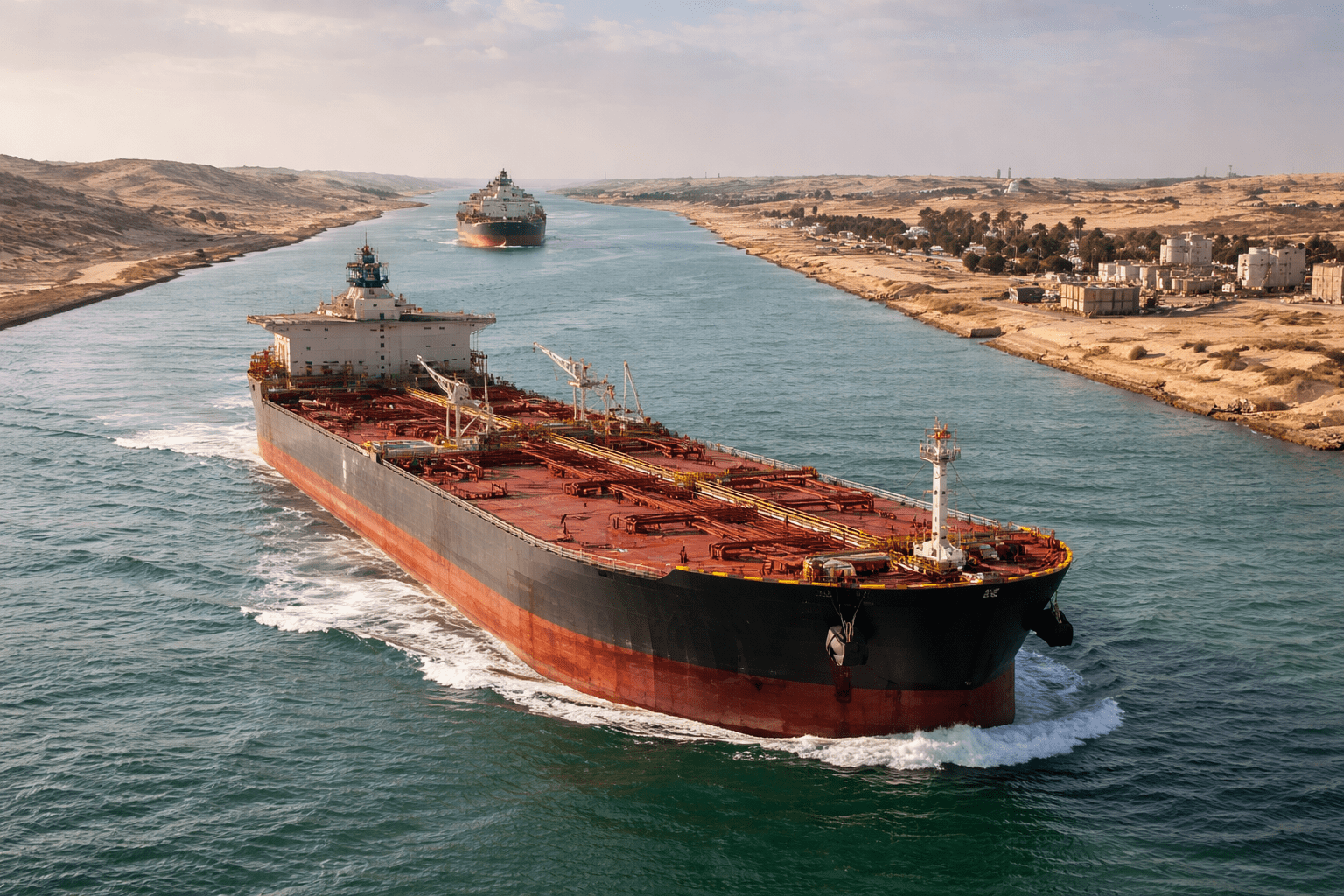
Despite three months of war severely restricting traffic through the Strait of Hormuz, the global oil market has remained calmer than many expected.
One key reason appears to be a surprising volume of “clandestine flows”, tankers moving oil through the vital chokepoint with transponders turned off to avoid detection.
Visible commercial traffic through the Strait has plummeted to roughly 15% of pre-war levels, according to JPMorgan.
Yet oil prices have not exploded to the extreme levels once feared, currently hovering well below recent peaks around $114 per barrel.
Ghost tankers and dark transits
Analysts believe a significant amount of crude is still escaping the blockade through covert means.
JPMorgan estimated that clandestine flows reached about 2.1 million barrels per day in the final two weeks of May.
Bob McNally, founder of Rapidan Energy Group, told CNN that this leakage has helped mitigate the crisis.
We assume Hormuz traffic has been 0% to 10% of prewar flows, but with this leakage it could be a little higher. It’s not nearly enough to avoid big and bullish inventory draws, but it does take some of the edge off.
Piper Sandler’s Jan Stuart estimated even higher volumes, with about 2.9 million barrels per day making it out in May.
This included roughly 900,000 barrels of “ghost” transits, vessels moving dark with Automatic Identification System (AIS) signals switched off.
“The ghosts, or clandestine flows, help,” Stuart was quoted in the CNN report.
“There has been far better mitigating of the crisis than I would have thought possible.”
Vortexa data confirms rising dark activity
Maritime intelligence firm Vortexa has tracked hundreds of dark transits through the Strait of Hormuz since early March.
According to Vortexa, the share of outbound laden vessels transiting dark rose to 65.2% in May, up from previous months.
Non-Iranian operators now account for the majority of these dark movements, indicating the practice has become a broader commercial response to conflict risk rather than solely sanctions evasion.
“Gulf exports have not stopped, but a growing share of the physical flow is becoming harder to observe in real time.”
This reduced visibility complicates real-time market analysis on cargo timing, origin, and availability, adding another layer of uncertainty for traders and analysts.
Multiple factors supporting market calm
Clandestine flows are only part of the story.
Lower Chinese imports, strategic reserve releases, rerouting of cargoes, and some demand destruction have also helped absorb the shock from the lost 15–16 million barrels per day of pre-war flows.
Brent crude recently traded around $93 per barrel, elevated but far from the nightmare scenarios of $150–$200 oil that some had warned about earlier in the conflict.
While dark transits and other mitigations have provided temporary relief, experts caution that the situation remains fragile.
Any escalation in naval activity, stricter enforcement of the blockade, or further infrastructure damage could quickly tighten supplies and push prices higher.
Inventory draws continue at a notable pace, and the Northern Hemisphere’s peak summer demand season is approaching.
Reduced visibility from dark movements also raises the risk of misreading physical market balances.
For now, the “leaking” Strait of Hormuz has helped prevent a full-blown energy crisis.
However, with the conflict showing no immediate signs of resolution, the global oil market continues to operate in a high-risk environment where clandestine flows provide only partial and uncertain relief.
Things may get worse
Some experts believe that the market is being distracted by the current “workarounds”, and is underestimating the real-world impact, according to the CNN report.
Commercial oil inventories have been shrinking rapidly since the war began, and America’s Strategic Petroleum Reserve is now on track to hit its lowest level since the early 1980s.
“Things are going to get worse,” warned Stuart of Piper Sandler.
He projects Brent crude will average around $130 a barrel in July and August. If that forecast materialises, US gasoline prices could surge past $5 a gallon this summer, compared with roughly $4.20 today.
Stuart believes prices will need to climb quickly to trigger further emergency releases and to push consumers toward cutting back.
“You’ll need to persuade people. That’s far easier to do when prices are high,” he said.
The post Ghost tankers ease Hormuz supply shock as oil price risks build appeared first on Invezz